
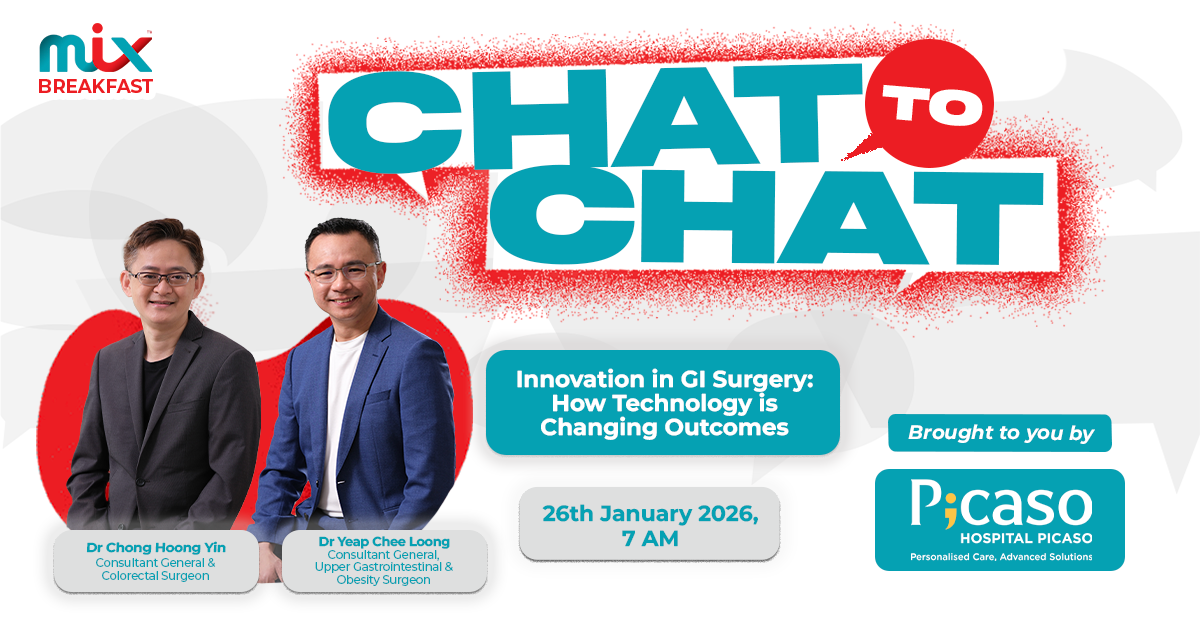
Innovation in GI Surgery: How Technology is Changing Outcomes
Mix FM
January 21, 2026
Advanced GI Surgery with Faster Healing
When people hear “surgery”, many imagine big cuts and long recovery times.
But with today’s advanced tech, gastrointestinal (GI) surgery has evolved – using minimally invasive techniques to allow smaller incisions and smoother recovery.
Part 1
Part 2
Part 3
Get expert insights from Dr Yeap Chee Loong, General, Upper Gastrointestinal & Obesity Surgeon
Q1: Minimally invasive and robotic surgeries are often mentioned nowadays. What real differences do they make in terms of surgical precision and patient safety?
A1: These surgeries give us better precision and clearer visuals. Robots and keyhole techniques reduce risks, protect surrounding organs and allow complex procedures with less trauma for the patient.
Q2: How has technology changed the way upper gastrointestinal and obesity surgeries are performed in recent years?
A2: Many surgeries now use small incisions or robotic assistance instead of open surgery. This means less pain, faster recovery, and more precise operations, even in complex cases.
Q3: How does advanced imaging and surgical planning technology help you make more accurate decisions during surgery?
A3: Advanced imaging lets us see anatomy clearly before and during surgery, guiding precise decisions and adapting safely to challenges as they come.
Q4: What emerging technologies in upper gastrointestinal and obesity surgery do you believe will significantly improve patient outcomes in the next few years?
A4: AI planning, smarter robotic systems, and enhanced imaging will make surgeries safer, more precise, and personalised, improving recovery and overall patient outcomes.
Get expert insights from Dr Chong Hoong Yin, General & Colorectal Surgeon
Q1: In colorectal cancer surgery, how does technology help ensure the cancer is removed effectively while preserving important functions like bowel control?
A1: Technology allows precise tumour removal while protecting nearby nerves and muscles, preserving bowel function and daily life for patients.
Q2: Do you find that the availability of robotic surgery influences patients’ willingness to come forward earlier or accept surgical treatment, and how do you address misconceptions or fears around robotic procedures?
A2: Yes, the availability of robotic surgery often reassures patients and encourages them to seek treatment earlier, as it is seen as less invasive and safer. We address misconceptions by explaining that the surgeon remains fully in control and that robotic technology is designed to improve precision and recovery, not replace human expertise.
Q3: What role does technology play in preventing complications like infections or leaks after colorectal surgery?
A3: Advanced instruments and real-time monitoring reduce risks of leaks and infections, making surgery safer.
Q4: If we were to look into the operating theatre 5–10 years from now, how do you think technology will change colorectal cancer surgery?
A4: AI, smarter robotics, and better imaging will allow personalised surgeries, fewer complications, faster recovery, and better long-term quality of life.
Meet Our Specialists

Dr Yeap Chee Loong
Consultant General, Upper Gastrointestinal & Obesity Surgeon
Dr Chong Hoong Yin
Consultant General & Colorectal Surgeon




Consult Our Dedicated Specialists Today!
Decades of experience under their belt — at your service just a few clicks away.
Book Appointment Contact Us